
反奴隶制国际新报告:维吾尔地区国家强加的强迫劳动构成危害人类罪中的奴役罪,企业须退出该地区Anti-Slavery International report: state-imposed forced labour of Uyghurs amounts to enslavement as a crime against humanity; businesses must exit the region
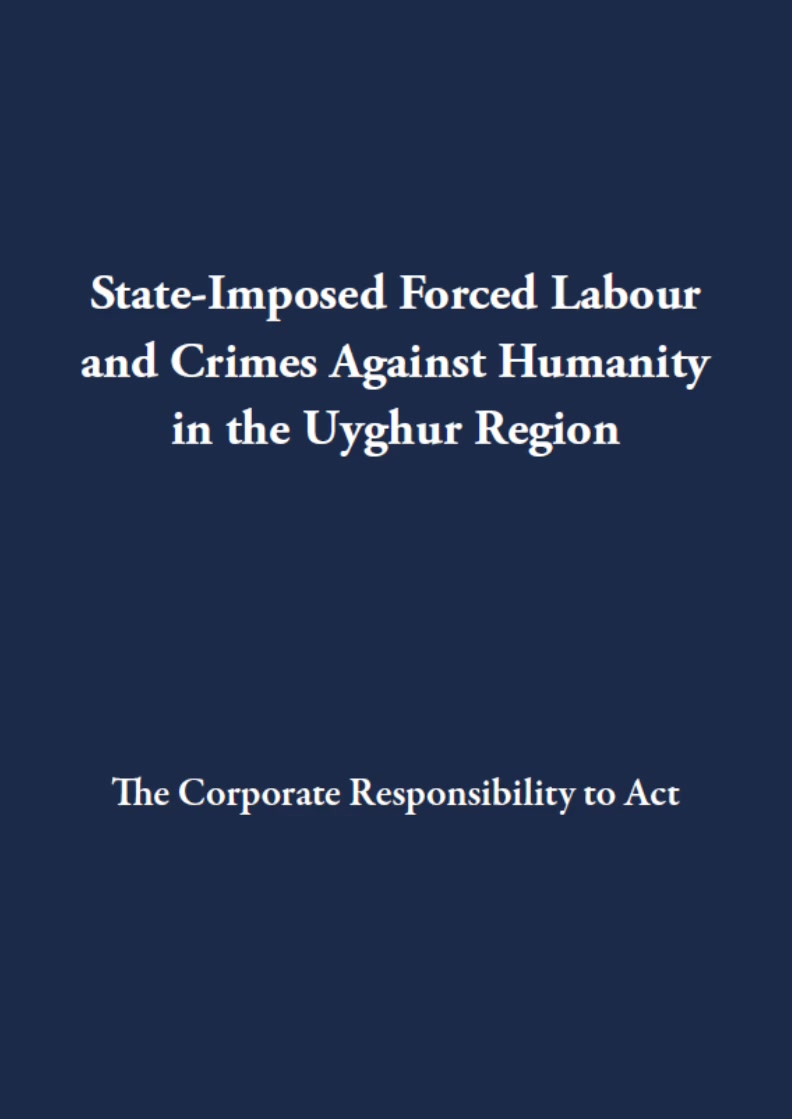
反奴隶制国际(Anti-Slavery International)2026 年 11 月 25 日发布新报告《维吾尔地区的国家强加的强迫劳动与危害人类罪:企业的责任行动》,认定中国政府针对维吾尔人及其他突厥和穆斯林为主群体实施的广泛、系统性国家强加的强迫劳动,构成《国际刑事法院罗马规约》下的危害人类罪——奴役罪。报告认定,集中营内的强迫劳动(2017–2019 年达到高峰)构成奴役罪,现为主要机制的所谓“劳动力转移”在深度胁迫环境下运作、多情形下亦构成奴役罪;强迫劳动还伴生严重剥夺人身自由、酷刑、强奸及其他性暴力与迫害,这些侵害本身也高度可能构成危害人类罪。报告警告,在维吾尔地区经营或采购的外国企业可能正在使奴役罪正常化、从而助长该罪行,要求企业负责任地退出该地区并终止当地供应商合同。本记录定性为持续核实。[1][2](11 月 27 日更新:世维会欢迎美国贸易代表办公室 11 月 25 日《301 条款》调查报告将维吾尔强迫劳动列为不公平竞争因素,并援引本报告。[3])Anti-Slavery International published a new report on November 25, 2026, 'State-Imposed Forced Labour and Crimes Against Humanity in the Uyghur Region: The Corporate Responsibility to Act', which finds that the widespread and systematic state-imposed forced labour perpetrated by the Government of China against Uyghurs and other Turkic and Muslim-majority peoples constitutes the crime against humanity of enslavement under the Rome Statute of the International Criminal Court. The report finds that forced labour in internment camps, which peaked between 2017 and 2019, constitutes enslavement, and that so-called 'labour transfers', now the primary mechanism of state-imposed forced labour, also amount to enslavement in many instances, operating within a profoundly coercive environment. The forced labour enables a wider array of egregious abuses, including severe deprivation of physical liberty, torture, rape and other forms of sexual violence and persecution, which are themselves highly likely to constitute crimes against humanity. The report warns that foreign businesses operating in or sourcing from the Uyghur Region may be normalising, and therefore contributing to, the crime of enslavement, and calls on them to responsibly exit the region and terminate contracts with suppliers there. This record is graded 'under ongoing verification'. [1][2] (Update, November 27, 2026: the World Uyghur Congress welcomed the USTR's November 25 Section 301 investigation report identifying Uyghur forced labour as a factor in unfair competition, and cited this report. [3])
为什么重要WHY IT MATTERS
这条记录值得收录,有三个原因。其一,定性升级:这不是一份泛泛的谴责,而是一份按《罗马规约》逐项论证的法律分析——报告的结论是,国家强加的强迫劳动本身即构成奴役罪,而不只是“可能构成”,为各国政府与企业的下一步行动提供了可直接援引的法律依据;2022 年联合国当代形式奴役问题特别报告员曾指出部分情形“可能构成奴役罪、值得进一步独立分析”,本报告正是应这一呼吁作出的分析。其二,机制点名了当下:集中营高峰已过,但“劳动力转移”已成为主要机制,且转移出的产品遍布全中国供应链,报告因此把尽职调查义务扩大到所有在华经营或采购的企业,而不只限于维吾尔地区——这与本站 10 月 29 日记录的美国 UFLPA 华大实体清单形成呼应,构成一条可追踪的议题线。其三,报告直面了一个现实:全球对维吾尔人受迫害的关注正在减弱,而中国政府近年降低了强迫劳动体系的公开可见度;报告的发布本身就是一次反向提醒。需要说明的是:本记录核实的是反奴隶制国际发表了这份报告及其核心结论;报告的法律认定属于委托研究的分析结论,本站未独立核实其全部证据,故定性为持续核实。[1][2]This record is worth keeping for three reasons. First, the grading has escalated: this is not a general condemnation but a legal analysis argued provision by provision under the Rome Statute — the report's conclusion is that state-imposed forced labour itself constitutes enslavement, not merely that it 'may' do so, giving governments and businesses a directly citable legal basis for action. In 2022 the UN Special Rapporteur on contemporary forms of slavery found that some instances 'may amount to enslavement as a crime against humanity, meriting a further independent analysis'; this report is the analysis that call asked for. Second, it names the mechanism of the present day: the internment-camp peak has passed, but 'labour transfers' are now the primary mechanism, and goods produced with them travel through supply chains across China — so the report extends the duty of heightened human rights due diligence to every business operating in or sourcing from anywhere in China, not only the Uyghur Region. That echoes this site's October 29 record of the US UFLPA entity listing of BGI Genomics and forms a trackable thread. Third, the report confronts an uncomfortable reality: global pressure on the persecution of Uyghurs has waned while the Chinese government has reduced the public visibility of its forced-labour systems; the report's publication is itself a reminder not to look away. Note: this record verifies that Anti-Slavery International published the report and its core conclusions; the report's legal findings are the conclusions of commissioned independent research, whose full evidentiary basis this site has not independently verified — hence the 'under ongoing verification' grading. [1][2]
详细记录Full report
事件卡:时间——报告发布于 2026 年 11 月 25 日(伦敦);所涉强迫劳动集中营高峰为 2017–2019 年;地点——中国新疆维吾尔自治区(报告称“维吾尔地区”)及全中国供应链;类型——维吾尔(群体歧视/强迫劳动);状态——进行中(报告已发布,企业与各国政府的回应待跟进);涉及群体——维吾尔人及其他突厥和穆斯林为主群体;经过——反奴隶制国际委托独立研究并发布报告,认定国家强加的强迫劳动构成奴役罪;官方处置——截至发稿未见中国政府就本报告作出回应(中国政府一贯否认强迫劳动指控);来源——反奴隶制国际 2026 年 11 月 25 日新闻稿与报告全文。
报告的核心认定:据反奴隶制国际 2026 年 11 月 25 日新闻稿,新报告《维吾尔地区的国家强加的强迫劳动与危害人类罪:企业的责任行动》认定,中国政府针对维吾尔人及其他突厥和穆斯林为主群体实施的广泛、系统性国家强加的强迫劳动,构成危害人类罪中的奴役罪。具体而言,集中营内的强迫劳动在 2017–2019 年达到高峰,由于国家当局对被拘押者行使了所有权意义上的权力,构成奴役罪;所谓“劳动力转移”现已成为国家强加的强迫劳动的主要机制,在包括拘押威胁与相关暴力在内的深度胁迫环境中运作,在许多情形下亦构成奴役罪。报告按《国际刑事法院罗马规约》进行评估,认定中国政府主动设计并实施了国家强加的强迫劳动政策,作为针对平民人口的广泛、系统性攻击的一部分;证据显示,政府的一个关键潜在动机是针对维吾尔人及其他少数群体的宗教与文化表达及身份认同。[1][2]
伴生侵害:报告认定,国家强加的强迫劳动还助长了一系列更广泛的严重侵害,包括严重剥夺人身自由、酷刑、强奸及其他形式的性暴力与迫害。这些侵害往往是奴役的后果,在某些情形下也是实现奴役的手段;这些侵害本身也高度可能构成危害人类罪。[1]
对企业的警告与要求:报告认为,鉴于奴役罪的指控以及劳动力转移作为国家强加的强迫劳动机制已超出维吾尔地区,每一家在华经营或采购的企业都有义务开展强化的人权尽责调查。而在维吾尔地区,任何有意义的人权尽责调查目前都不可能开展,因为权利人无法在不惧报复的情况下参与。报告警告,在维吾尔地区经营或采购的外国企业(包括本地注册的子公司)可能正在使奴役罪正常化、从而助长该罪行;企业因此必须负责任地退出维吾尔地区并终止与当地供应商的合同。反奴隶制国际同时呼吁各国政府立法并确保参与暴行罪行的企业被追究责任。[1]
机构表态:反奴隶制国际商业与人权顾问帕特里夏·卡里尔(Patricia Carrier)表示,企业在发生危害人类罪的地方经营时,首要责任是对受影响的人、而非利润;企业有道德义务撤出其存在或投资可能助长苦难与不公正的情形,而本报告的法律认定又为这一义务增添了紧迫性。该组织国际与专题倡导经理卡拉·普里斯特利(Cara Priestley)表示,维吾尔地区是棉花、纺织品与电子产品等原材料与制成品的重要来源地,由于劳动力转移被广泛使用,以维吾尔强迫劳动生产的产品可能遍布全中国,这使整个中国都成为企业的高风险地区,而不只是维吾尔地区。普里斯特利还指出,中国政府近年降低了强迫劳动体系的公开可见度,全球施压有所减弱,“现在不是移开视线的时候”。[1]
核实说明:本记录的核心事实——反奴隶制国际 2026 年 11 月 25 日发布了本报告、报告的核心结论与对企业的要求——来自该组织官网新闻稿与报告页;报告的法律认定属于其委托的独立研究的分析结论,本站未独立核实其全部证据与事实基础。中国政府一贯否认强迫劳动指控,截至发稿未见其就本报告作出回应。本记录定性为持续核实,将继续跟进各国政府与企业的回应。[1][2]
[2026 年 11 月 27 日更新] 美国贸易代表办公室《301 条款》调查与世维会回应:据 ANI 2026 年 11 月 27 日报道,世维会欢迎美国贸易代表办公室 11 月 25 日发布的《301 条款》调查报告《中国在制造业结构性产能过剩与生产领域的行为、政策与做法》,该报告将维吾尔强迫劳动列为造成不公平竞争与全球市场扭曲的因素之一;世维会主席图尔贡江·阿拉乌敦称,维吾尔强迫劳动不只是不公平竞争问题,而是危害人类罪、是正在进行的维吾尔种族灭绝的一部分,呼吁各国政府与企业确保经济利益不以牺牲基本人权为代价。世维会同时援引了反奴隶制国际同日发布的本报告。上述内容为世维会单方表态与美国贸易代表办公室报告的转述,本站未独立核实。[3]
Event card: Time — report published November 25, 2026 (London); forced labour in internment camps peaked between 2017 and 2019. Place — the Xinjiang Uyghur Autonomous Region of China (the 'Uyghur Region' in the report) and supply chains across China. Type — Uyghurs (group discrimination / forced labour). Status — ongoing (report published; responses from governments and businesses to follow). People involved — Uyghurs and other Turkic and Muslim-majority peoples. What happened — Anti-Slavery International commissioned independent research and published a report finding that state-imposed forced labour constitutes enslavement as a crime against humanity. Official response — no response from the Government of China to this report had been seen at the time of writing (the Chinese government consistently denies forced-labour allegations). Source — Anti-Slavery International press release and report page, November 25, 2026.
The report's core findings: According to Anti-Slavery International's press release of November 25, 2026, the new report, 'State-Imposed Forced Labour and Crimes Against Humanity in the Uyghur Region: The Corporate Responsibility to Act', finds that the widespread and systematic state-imposed forced labour perpetrated by the Government of China against Uyghurs and other Turkic and Muslim-majority peoples constitutes the crime against humanity of enslavement. Specifically, forced labour in internment camps, which peaked between 2017 and 2019, constitutes enslavement as a crime against humanity, as state authorities exercised powers of ownership over detainees; so-called 'labour transfers', which now function as the primary mechanism of state-imposed forced labour, operate within a profoundly coercive environment that includes threats of detention and associated violence, and in many instances this policy has resulted in the commission of the crime against humanity of enslavement. Assessed under the Rome Statute of the International Criminal Court, the report finds that the Government of China actively designed and implemented state-imposed forced labour policies as part of a widespread and systematic attack against the civilian population; the evidence shows that a key underlying motivation of the government is the targeting of the religious and cultural expression and identity of Uyghurs and other minoritised groups. [1][2]
Associated abuses: The report finds that state-imposed forced labour enables a wider array of egregious abuses such as severe deprivation of physical liberty, torture, rape and other forms of sexual violence and persecution. These abuses are often the consequence of enslavement, and in some cases the abuses are the means by which enslavement is achieved; these harms are highly likely to also constitute crimes against humanity. [1]
The warning and demands for business: The report finds that, given the allegations of a crime against humanity and the use of labour transfers beyond the Uyghur Region as a mechanism of state-imposed forced labour, every business operating in, or sourcing from, anywhere in China has a duty to conduct heightened human rights due diligence. Heightened human rights due diligence — and in fact any meaningful human rights due diligence — is currently impossible in the Uyghur Region because rightsholders cannot participate without fear of reprisal. The report warns that foreign businesses that operate in or source from the Uyghur Region, including locally incorporated subsidiaries, may be normalising, and therefore contributing to, the crime against humanity of enslavement. Businesses must therefore responsibly exit the Uyghur Region and terminate contracts with suppliers there. Anti-Slavery International also calls on governments to legislate and ensure businesses that are complicit in atrocity crimes are held accountable. [1]
What the organisation said: Patricia Carrier, Business and Human Rights Adviser at Anti-Slavery International, said: 'When businesses operate in places where crimes against humanity are being committed, their first responsibility is to the people affected, not to their profits. Companies have a moral obligation to remove themselves from situations where their presence or investments may contribute to suffering or injustice. And now, with this finding, there are legal implications that add further urgency to this obligation.' Cara Priestley, International and Thematic Advocacy Manager at Anti-Slavery International, said: 'The Uyghur Region is a major source of raw materials and manufactured goods, including cotton, textiles, and electronics. Due to the extensive use of labour transfers, goods produced with Uyghur forced labour may be found across China. This makes the entire country a high-risk area for business, not just the Uyghur Region.' Priestley added that the Government of China has reduced public visibility of its systems of state-imposed forced labour in recent years, that global pressure has since waned, and that 'now is not the time to look away.' [1]
Verification note: The core facts of this record — that Anti-Slavery International published this report on November 25, 2026, its core conclusions and its demands on business — come from the organisation's press release and report page; the report's legal findings are the conclusions of commissioned independent research, whose full evidentiary basis this site has not independently verified. The Government of China consistently denies forced-labour allegations, and no response to this report had been seen at the time of writing. This record is graded 'under ongoing verification' and will be updated on responses from governments and businesses. [1][2]
[Update, November 27, 2026] USTR Section 301 investigation and the World Uyghur Congress response: according to ANI on November 27, 2026, the World Uyghur Congress welcomed the Section 301 investigation report published by the Office of the United States Trade Representative on November 25, 2026 — “China's Acts, Policies, and Practices Relating to Structural Excess Capacity and Production in Manufacturing Sectors” — which identifies the use of Uyghur forced labour as a factor contributing to unfair competition and global market distortions. WUC President Turgunjan Alawdun said Uyghur forced labour is not simply an issue of unfair competition but a crime against humanity and an integral part of the ongoing Uyghur genocide, and called on governments and businesses to ensure that economic interests do not come at the expense of fundamental human rights. The WUC also cited the Anti-Slavery International report published on the same day. The above is the WUC's own statement and a summary of the USTR report, and has not been independently verified by this site. [3]
核实来源
- 反奴隶制国际(Anti-Slavery International),2026-11-25:“New Anti-Slavery International report concludes that state-imposed forced labour of Uyghurs and other Turkic and Muslim-majority peoples constitutes a crime against humanity and businesses risk contributing to the crime”——新报告《维吾尔地区的国家强加的强迫劳动与危害人类罪:企业的责任行动》认定,针对维吾尔人及其他突厥和穆斯林为主群体的广泛、系统性国家强加的强迫劳动构成危害人类罪中的奴役罪;集中营强迫劳动(2017–2019 年高峰)与现为主要机制的“劳动力转移”多情形下构成奴役罪;伴生严重剥夺人身自由、酷刑、强奸及其他性暴力与迫害;企业须负责任地退出维吾尔地区并终止当地供应商合同,各国政府应立法追责。
- 反奴隶制国际(Anti-Slavery International),2026 年 11 月报告页:“State-Imposed Forced Labour and Crimes Against Humanity in the Uyghur Region”——该组织 2025 年委托本报告,寻求对维吾尔地区国家强加的强迫劳动在危害人类罪语境下的独立分析及企业责任指引;2022 年联合国当代形式奴役问题特别报告员曾认定部分情形“可能构成奴役罪、值得进一步独立分析”,本报告即为该分析。
- ANI(经 Manchester News 转载),2026年11月27日:“WUC urges global action against Uyghur forced labour after US trade investigation findings”——世维会欢迎美国贸易代表办公室 11 月 25 日《301 条款》调查报告将维吾尔强迫劳动列为不公平竞争与全球市场扭曲的因素,并援引反奴隶制国际同日发布的本报告;世维会主席称强迫劳动是危害人类罪。本站已核对报道全文。
Primary sources
- Anti-Slavery International, November 25, 2026: 'New Anti-Slavery International report concludes that state-imposed forced labour of Uyghurs and other Turkic and Muslim-majority peoples constitutes a crime against humanity and businesses risk contributing to the crime' — the new report, 'State-Imposed Forced Labour and Crimes Against Humanity in the Uyghur Region: The Corporate Responsibility to Act', finds that the widespread and systematic state-imposed forced labour against Uyghurs and other Turkic and Muslim-majority peoples constitutes the crime against humanity of enslavement; forced labour in internment camps (peaking 2017–2019) and the now-primary 'labour transfers' amount to enslavement in many instances; associated severe deprivation of physical liberty, torture, rape and other sexual violence and persecution; businesses must responsibly exit the Uyghur Region and terminate local supplier contracts, and governments should legislate to hold complicit businesses accountable.
- Anti-Slavery International, November 2026 report page: 'State-Imposed Forced Labour and Crimes Against Humanity in the Uyghur Region' — the organisation commissioned this report in 2025, seeking an independent analysis of the role of state-imposed forced labour in the context of crimes against humanity in the Uyghur Region and guidance on businesses' responsibilities; in 2022 the UN Special Rapporteur on contemporary forms of slavery found that some instances of this state-imposed forced labour 'may amount to enslavement as a crime against humanity, meriting a further independent analysis', and this report provides that analysis.
- ANI (via Manchester News), November 27, 2026: “WUC urges global action against Uyghur forced labour after US trade investigation findings” — the World Uyghur Congress welcomed the USTR's November 25 Section 301 investigation report identifying Uyghur forced labour as a factor in unfair competition and global market distortions, and cited the Anti-Slavery International report published the same day; the WUC president called forced labour a crime against humanity. This site has checked the full text of the report.
上述链接是所引用报告或文章的原始发布方。其结论已在正文中明确归属,不代表本站独立完成了全部事实认定。The links above point to the original publishers of the cited reports or articles. Their conclusions are attributed in the text and do not amount to independent verification of every fact by this site.