Kazakh writer Zhengis Reskhan reported secretly sentenced: son says seven and a half years, family has still not seen the judgment
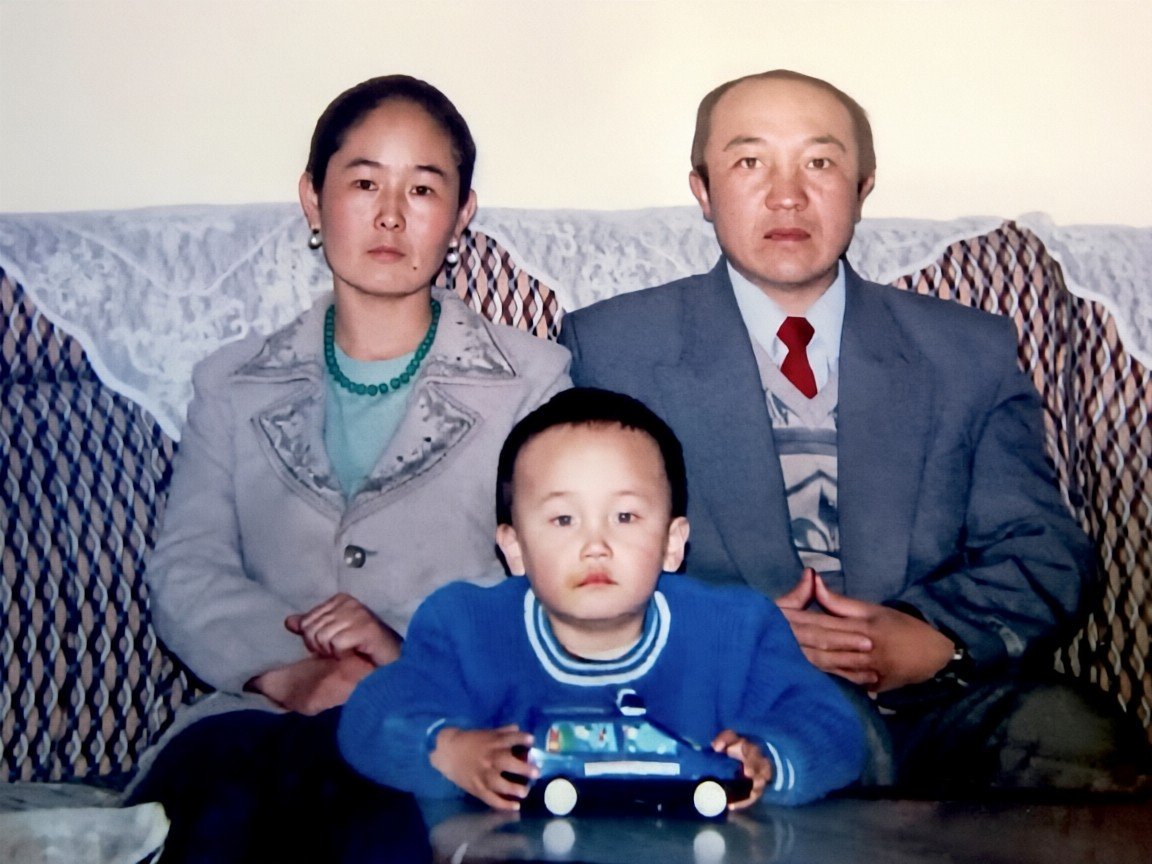
Kazakh writer Zhengis Reskhan, 57, has reportedly been sentenced in secret. Reskhan was taken away by police in Xinjiang on March 19, 2026, and tried behind closed doors on August 15, 2026; his family never saw an indictment and was barred from the hearing. His son Nartay Zhengis wrote in a first-person account published by Bitter Winter on November 27, 2026 that his father had been sentenced to seven years and six months, with six years and ten months still to serve; a ChinaAid report of November 17, 2026 put the sentence at six years and eight months — both figures come from what the family learned through unofficial channels, and the family has still not received a written judgment, so the exact term and the charges remain unverified. Reskhan's wife, Nartay's mother Gulshat Mamik, lost contact several months ago and her whereabouts remain unknown. Nartay and his family left Kazakhstan on October 18 after facing pressure and threats of forced return there, and reached Norway, where they are seeking asylum. This record is published as under ongoing verification. [1][2][3][4]
Why it matters
This record is worth publishing for three reasons. First, it is a secret trial of a minority writer: Reskhan is a prominent Kazakh writer and former chairman of the Hami Regional Writers Association; after he was taken away, his family received no legal documents, the trial was held behind closed doors with the family barred, and no written judgment has been produced even after sentencing — the opacity of the whole process is itself the central fact of the case. Second, although the reported sentence length differs between sources, the fact of the sentencing is corroborated from several directions: Amnesty International raised concerns about his detention in July, Radio Free Europe/Radio Liberty reported the closed-door trial in August, and ChinaAid and Bitter Winter each reported in November that the family had learned of the sentence — a complete corroborating chain that meets this site's standard for publication. Third, the case involves transnational repression: after campaigning for his father in Kazakhstan, the son faced repeated pressure from officials there — one warned him to “think about your wife and children” — and was finally forced to flee to Europe with his family to seek protection, showing the full chain of pressure on relatives abroad. To be clear: the exact sentence (six years and eight months versus seven years and six months) and the charges (the family says police verbally accused him of “extremist thoughts” and “undermining ethnic unity”, with no legal documents seen) remain unverified, and this record presents both accounts side by side without choosing between them; the allegations about the Croatian border police's treatment of the family come only from the son's account and have not been independently verified. [1][2][3][4]
Full report
Event card: Time — taken away on March 19, 2026; tried behind closed doors on August 15, 2026; the family learned in November 2026 that he had been sentenced in secret (the exact sentencing date has not been made public); Place — Barkol Kazakh Autonomous County, Hami, Xinjiang Uyghur Autonomous Region, China; Type — judicial persecution; Status — sentenced (the reported term differs between sources, see below); People involved — Kazakh writer Zhengis Reskhan (57), his son Nartay Zhengis (in his early 30s, now in Norway seeking asylum), and his wife Gulshat Mamik (out of contact for several months); Account — Reskhan was taken away by police in Xinjiang on March 19, 2026 after months of repeated police interrogations; his family received no detention notice, did not know where he was held, and could not contact him; on August 15, 2026 he was tried behind closed doors, with his family never shown an indictment and his wife barred from the hearing; after reaching Norway, his son learned through unofficial channels that his father had been sentenced; Official response — no public response from the Chinese authorities on this case has been seen, and the family has received no legal documents; Sources — Bitter Winter, November 27, 2026, first-person account by Nartay [1]; ChinaAid, November 17, 2026 [2]; Amnesty International, July 2026 urgent action [3]; Radio Free Europe/Radio Liberty, August 14, 2026 [4].
The detention and the closed-door trial: according to the family, Reskhan was repeatedly interrogated by police for months before he was taken away on March 19, 2026; after that, the family received no official notification of his detention, legal status or the reasons for it, and had no contact with him. His son says police verbally accused Reskhan of holding “extremist thoughts”; other reporting says the accusation included “undermining ethnic unity”, but the family has seen no formal charges or legal documents. The case was tried behind closed doors on August 15, 2026, with the family and his wife barred from the hearing; the family's lawyer had told them that once the court issued its verdict, the only information that might be made public would be the length of the sentence. Amnesty International raised concerns about his detention in July 2026, and Radio Free Europe/Radio Liberty reported the closed-door trial on August 14, 2026. Reskhan is a former chairman of the Hami Regional Writers Association, a former editor of a Hami literary magazine and a research librarian in Barkol County; he has written 13 literary works, some translated into Chinese, has won the Tianshan and Junma literary awards, and is a member of the China Writers Association and the Xinjiang Writers Association. [2][3][4]
Two accounts of the sentence: in his first-person account published by Bitter Winter on November 27, 2026, Nartay wrote that his father had been sentenced to seven years and six months, with six years and ten months still to serve according to the latest information available to him; he added that to this day the family has no complete copy of the judgment and cannot verify all the details of the case, and that even as his son he has been unable to establish exactly what his father was charged with or whether he received a fair trial. A ChinaAid report of November 17, 2026 said Nartay had learned after arriving in Norway that his father had been sentenced to six years and eight months, with the family likewise having received no written verdict. Both sentence figures come from what the family learned through unofficial channels; this site presents them side by side without choosing between them. The exact term, the sentencing date and the charges cannot be verified until the family sees the judgment. [1][2]
What happened to the family abroad: Nartay left China in 2017, moved to Kazakhstan and obtained Kazakh citizenship. In May 2026 he appealed to Kazakhstan's presidential office and Foreign Ministry and to the US and Chinese embassies in Astana for help; the Kazakh Foreign Ministry replied in writing that his father's case was an internal Chinese matter and that Kazakhstan would not intervene. After Nartay publicized his father's detention through the Atajurt Kazakh Human Rights organization, Kazakh officials repeatedly contacted him from August, pressing him to stop speaking publicly; one official warned him, “You should also think about your wife and children,” which he understood as a threat and feared forced return to China. On October 18, Nartay left Kazakhstan with his wife and three young children, walking through forests and across rivers via Bosnia and Herzegovina, Croatia, Slovenia and Italy towards Norway; on October 24, after entering Croatia from Bosnia, the family was detained by border police for six days. Nartay says officers beat him in front of his wife and children, that his children suffered emergencies involving vomiting and loss of consciousness, and that requests for medical help went unanswered — ChinaAid notes that the allegations about the Croatian police have not been independently verified. The family eventually reached Norway, where the Norwegian authorities are reviewing their asylum applications; because they passed through Croatia, they may be returned there. Nartay's mother, Gulshat Mamik, lost contact several months ago, and her son still cannot establish what has happened to her or whether she is safe. [1][2]
Verification note: this record verifies the following facts corroborated by several sources — Reskhan was taken away on March 19, 2026 and then could not be contacted (recorded in Amnesty International's July urgent action and in Radio Free Europe/Radio Liberty's August reporting); the closed-door trial on August 15, 2026 (reported by Radio Free Europe/Radio Liberty, with the family never shown an indictment); and the family's arrival in Norway and asylum applications in October 2026 (ChinaAid, November 17, 2026, and Bitter Winter, November 27, 2026, agree). The parts not verified — the exact sentence (six years and eight months versus seven years and six months), the sentencing date, and the charges and their legal basis (the family has not seen the judgment); the whereabouts and safety of Gulshat Mamik; and the details of how the Croatian border police treated the family (only the son's account). As of publication, no public response from the Chinese authorities on this case has been seen. This record is published as under ongoing verification; this site will continue to follow the judgment, the mother's whereabouts and the asylum applications. [1][2][3][4]
Primary sources
- Bitter Winter, first-person account by Nartay Zhengis, November 27, 2026: “My Father, a Kazakh Writer from Xinjiang, Was Sentenced in Secret” — says his father was sentenced to seven years and six months, with six years and ten months still to serve; the family still has no copy of the judgment and cannot verify all the details; his mother lost contact several months ago; the family left Kazakhstan on October 18 and reached Norway after six days in detention in Croatia from October 24. This site has checked the full text of the report.
- ChinaAid, November 17, 2026: “Kazakh Christian flees to Norway as father faces prison in China” — says the son learned after arriving in Norway that his father had been sentenced to six years and eight months, with no written verdict received by the family; Reskhan, 57, was detained on March 19 in Xinjiang; Amnesty International raised concerns in July and Radio Free Europe/Radio Liberty reported the closed-door trial in August; notes that the allegations about the Croatian police have not been independently verified. This site has checked the full text of the report.
- Amnesty International, July 2026 urgent action ASA 17/1269/2026: “China: Prominent Kazakh Writer Held in Secret Detention: Zhengis Reskhan” — Reskhan has been detained since March 19, 2026; his family has received no official notification of his detention, legal status or the reasons for it, and has had no contact with him; according to his son, the authorities verbally accused him of “promoting extremist thought” and “holding extremist thoughts” but provided no formal charges or legal documents.
- Radio Free Europe/Radio Liberty, Zamira Eshanova, August 14, 2026: “China's New 'Ethnic Unity' Law Looms Over Closed-Door Trial Of Kazakh Writer” (via GlobalSecurity reprint) — the family learned the closed-door trial was set for August 15, with up to ten years in prison possible; no indictment had been shown, the lawyer said no one would be permitted to attend the hearings, and the wife was barred; the charges came soon after the new Law on Promoting Ethnic Unity and Progress took effect, but whether the case was brought under that law remained unclear.
The links above point to the original publishers of the cited reports or articles. Their conclusions are attributed in the text and do not amount to independent verification of every fact by this site.